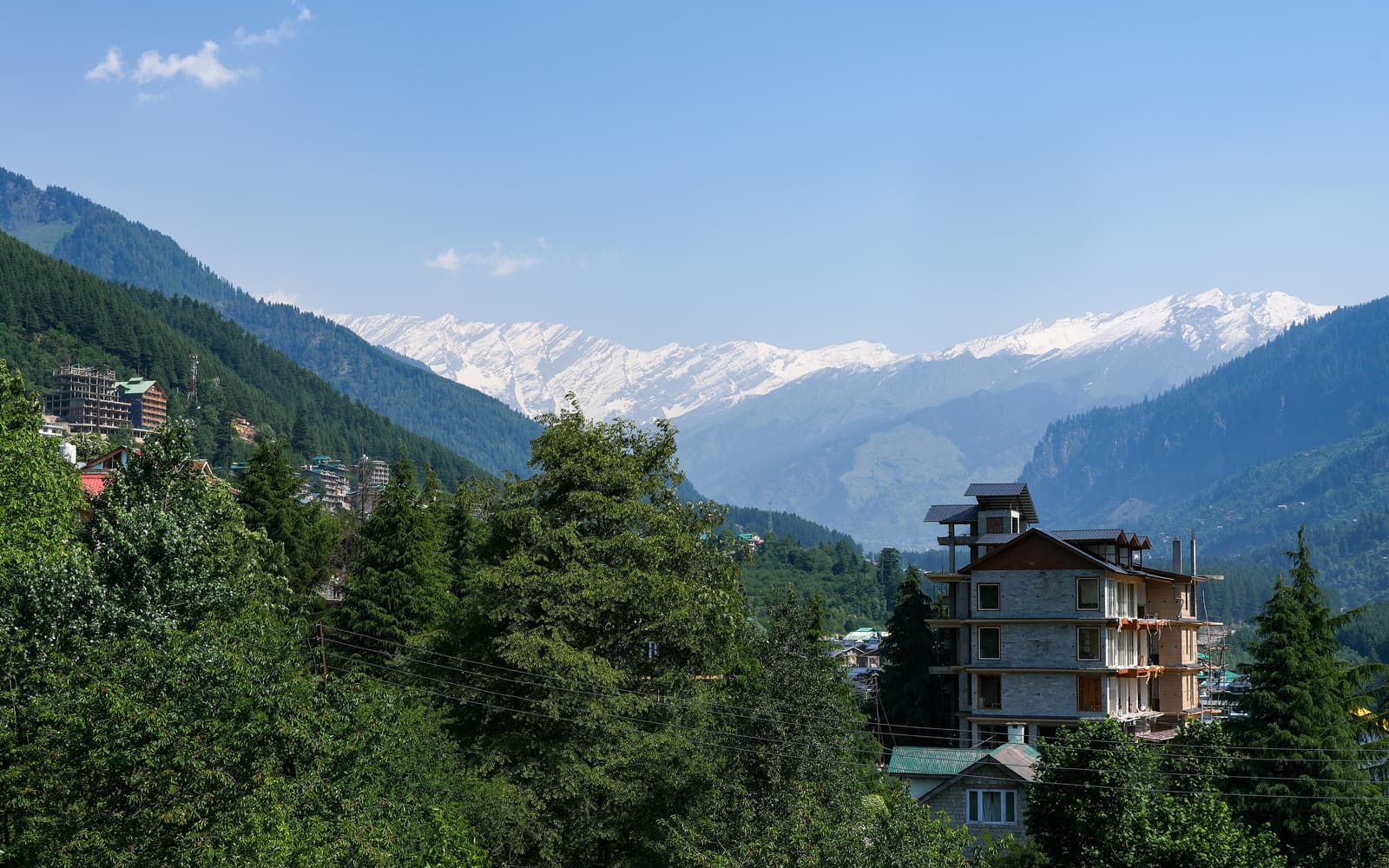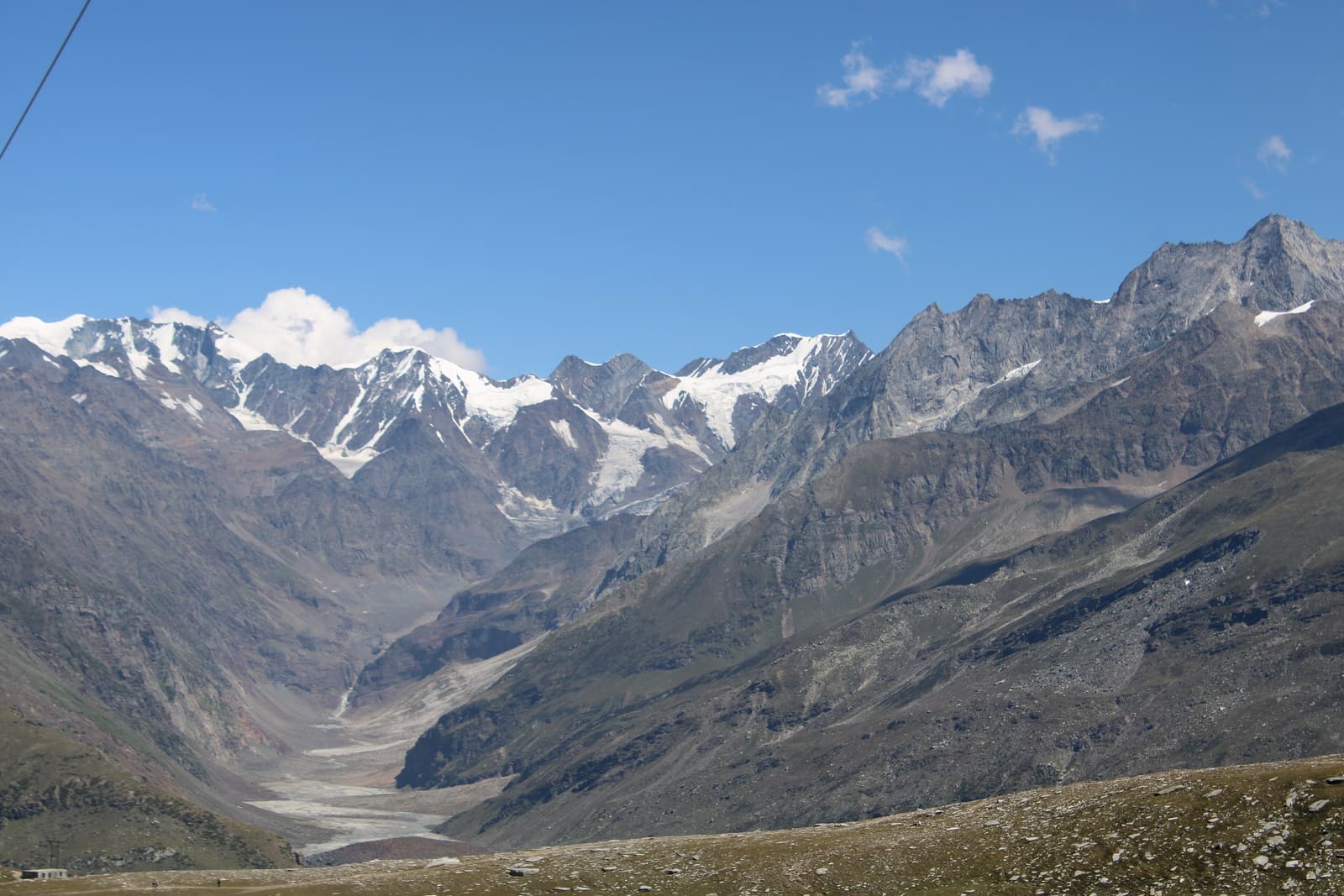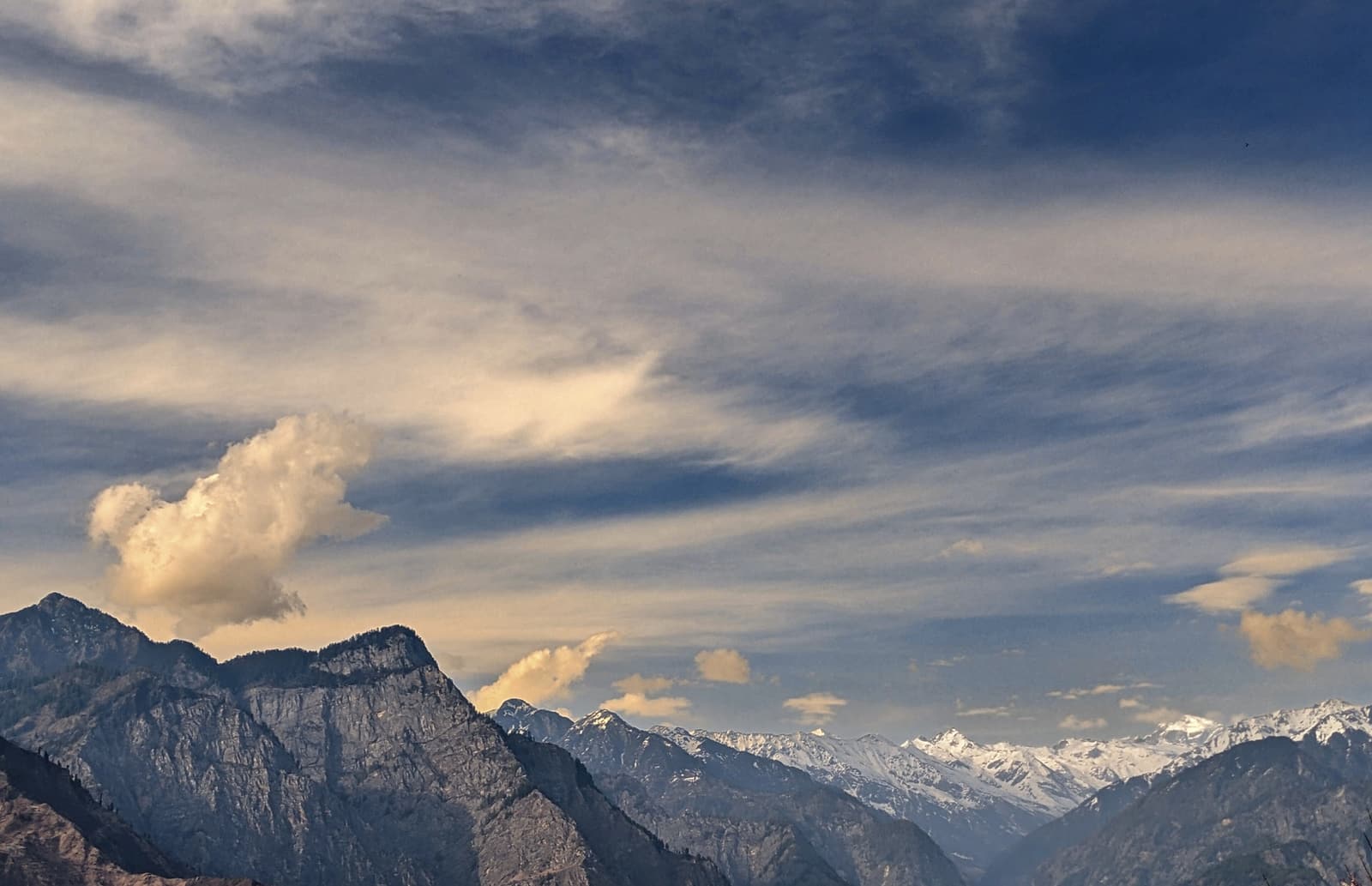
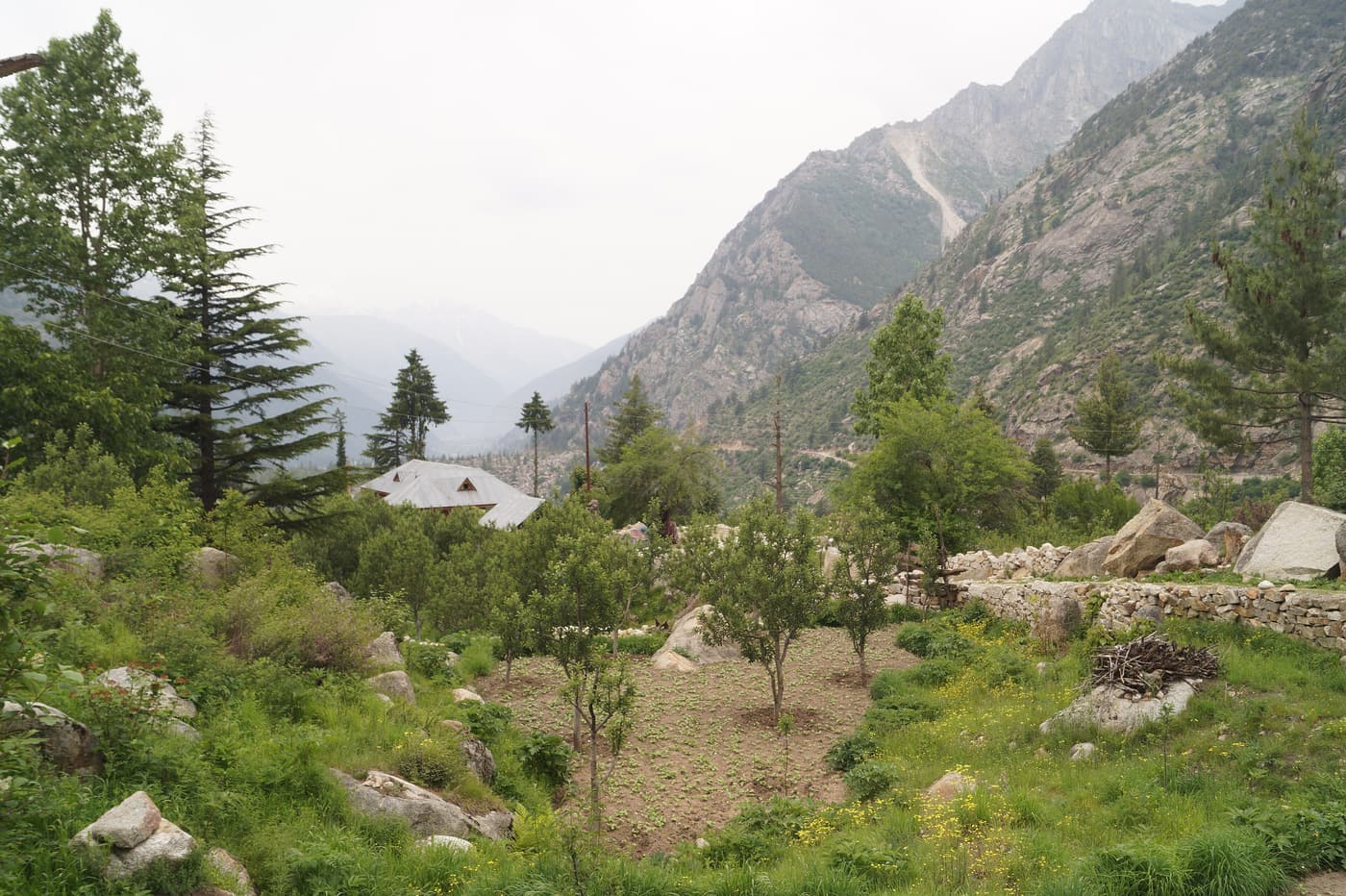
Kinnaur is the district between Shimla and Spiti, where the Sutlej cuts one of the deepest gorges in the Himalaya. Its villages combine Hindu and Buddhist traditions, its wooden temples have pagoda roofs and carved facades, and its hillsides are covered in apple orchards that bloom in April and are harvested in September and October.
The views are the headline: from Kalpa, the sacred Kinnaur Kailash massif (about 6,050 m) rises directly across the valley, glowing pink at sunrise. The Baspa valley, with Sangla and Chitkul, is one of the most beautiful valleys in the state.
Top things to do in Kinnaur
Kalpa
An old village above Reckong Peo with the Narayan-Nagini temple, Buddhist monastery and the dramatic Suicide Point road. Watch sunrise and sunset light on Kinnaur Kailash from your balcony.
Sangla and Chitkul
Follow the Baspa river to Sangla, with its Kamru fort and temples, then to Chitkul at about 3,450 m, often called the last village on the Indian side of the old Hindustan–Tibet road.
Nako
A stone-and-mud village around a small sacred lake at about 3,600 m, on the way to Spiti — a good acclimatisation stop.
Sarahan
On the lower edge of Kinnaur, the Bhimakali temple at Sarahan is a spectacular example of Himachali temple architecture, with views of the Srikhand range.
How to get to Kinnaur
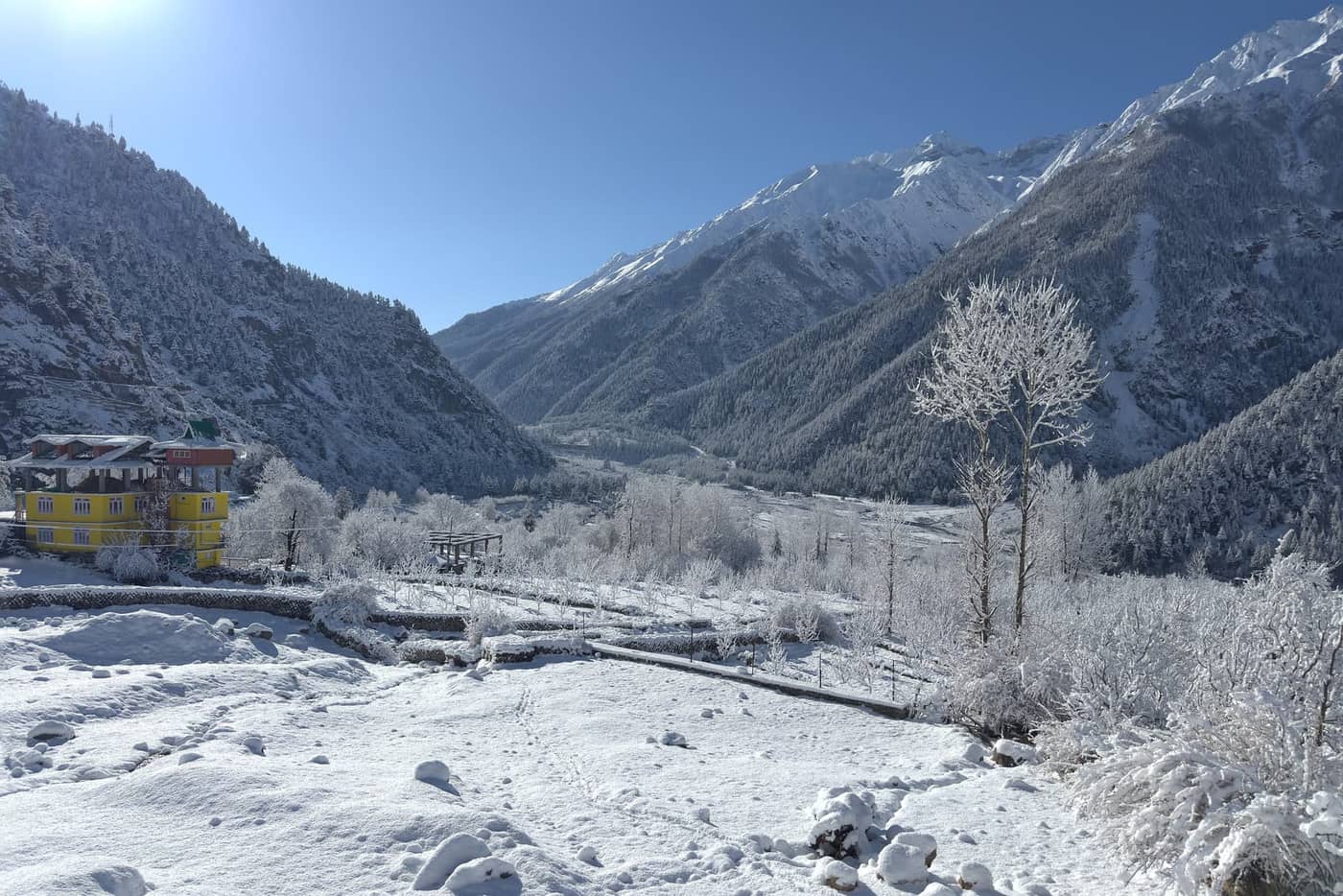
- Reckong Peo, the district headquarters, is about 230–250 km from Shimla (8–10 hours) along the Hindustan–Tibet road (NH5). HRTC buses run daily from Shimla.
- Sangla is about 40 km from Karcham on the main road; Chitkul is 25 km beyond Sangla.
- Most Spiti road trips pass through Kinnaur; foreign nationals need an Inner Line Permit beyond Reckong Peo towards Spiti.
Insider tips
- The NH5 in Kinnaur is prone to rock falls and landslides, especially in the monsoon and during spring thaw; avoid driving after dark.
- Buy apples, dried apricots and chilgoza pine nuts from local shops in season.
- The Kinnaur Kailash parikrama is a demanding pilgrimage trek, usually in August; go only with an experienced guide.
Tours that include Kinnaur
These guided trips cover Kinnaur or combine easily with a visit:
Road trip From Delhi: 9-Day Kinnaur and Spiti Valley Tour with Meals
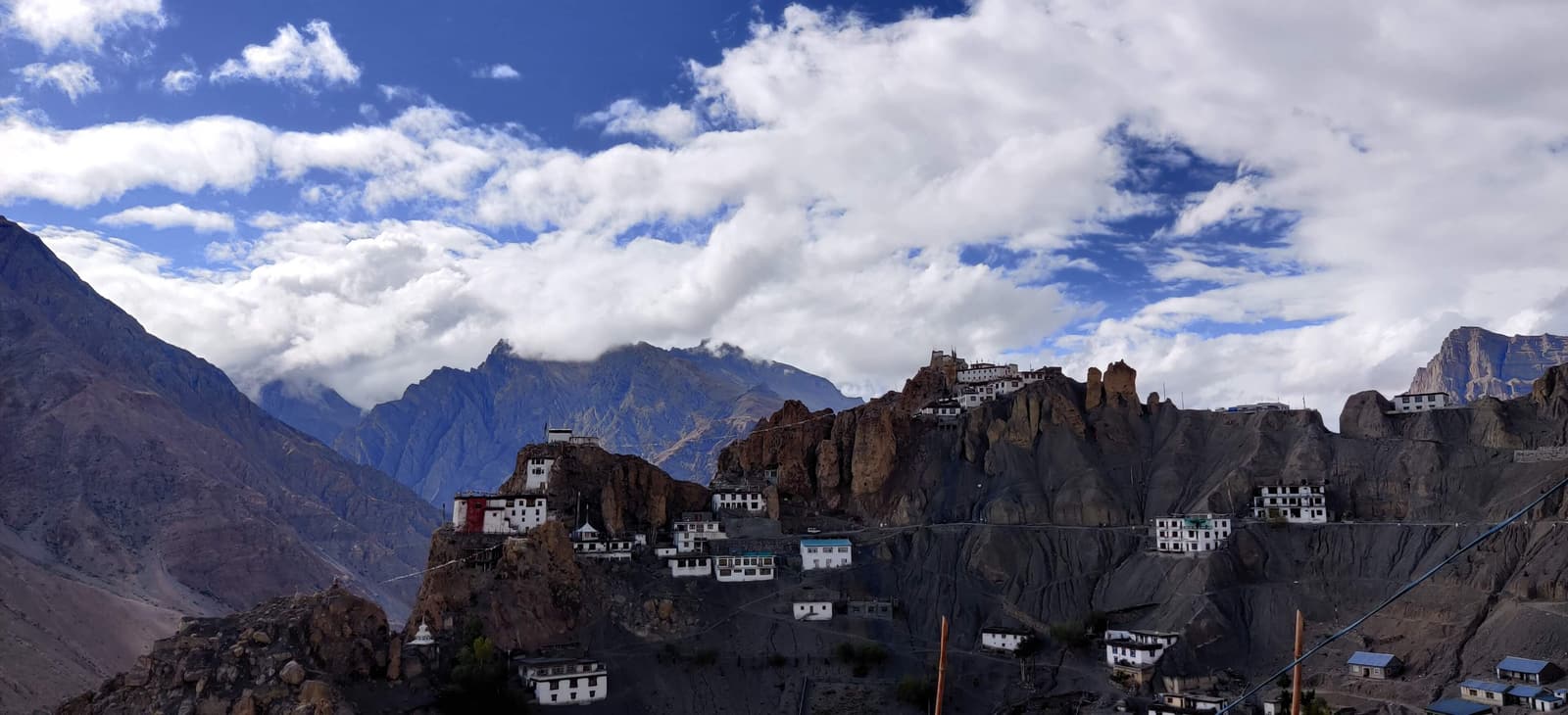
A complete Kinnaur-and-Spiti journey from Delhi with meals included, spending time in the apple-orchard villages of the Baspa valley before climbing into the cold desert of Spiti.
- Sangla and Chitkul in the Baspa valley
- Kalpa’s views of Kinnaur Kailash
- Nako, Tabo, Kaza and the Spiti monasteries
 Road trip
 Shimla: 8-Day Spiti Valley Tour via Kalpa, Kaza & Manali
The classic way to see Spiti: start in Shimla and follow the Sutlej through Kinnaur to Kalpa, cross into the high desert at Nako and Tabo, base yourself in Kaza for Key, Kibber and Langza, then exit over Kunzum La and the Atal Tunnel to Manali.
- The full Spiti circuit: Kinnaur, Kalpa, Tabo, Kaza, Manali
- Key, Dhankar and Tabo monasteries
- Gradual altitude gain for safer acclimatisation